
The 5 Minute Linguist is here to make accurate and up-to-date knowledge about language accessible. In bite-sized chunks, the book tackles a variety of linguistic questions that would fascinate language students, professionals, and anyone curious about the multi-faceted phenomenon that is language.
In anticipation of the forthcoming third edition of The 5 Minute Linguist, its editors Caroline Myrick and Walt Wolfram shed some light on their work, their passions, and their social responsibility as linguists.
Interview conducted by NML Vice President Greg Nedved.
How did you become affiliated with The 5-Minute Linguist?
Walt:
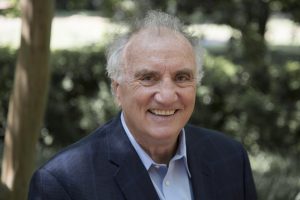
I consulted with the original editors of The 5-Minute Linguist because I thought the idea was cool and critical for making the study of language relevant to popular culture. I don’t want linguistics isolated and confined to a few thousand professional linguists with advanced degrees in the field who can only speak to each other. I want ordinary citizens to understand its contribution to everyday life.
At the same time, the study of language is also changing with technology, social media, and digital everything. Seeing these changing trends, it became apparent to me that we needed the next generation of scholars and engaged professionals to guide us in our public presence. Co-editor, Caroline Myrick offers that essential perspective as we strive to include recent trends, issues, and interests in our rapidly evolving field.
Caroline:
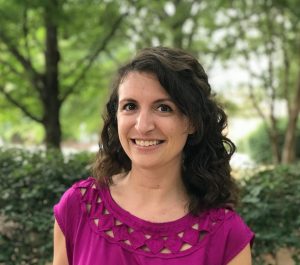
I’m a huge fan of The 5-Minute Linguist due to its accessible nature and fun style. I also love the 5-Minute Linguist competition that the Linguistic Society of America (LSA) does at their annual conference now; it serves as an inspirational (and entertaining) reminder that linguists can—and should—be able to talk about research briefly and accessibly.
After spending some time with Dr. Rickerson (previous 5ML co-editor) and discussing my research, interests, and experiences, it was decided that Walt and I would make a great editorial team for the book’s third edition. I’m so excited for this opportunity! It’s a dream come true.
What is your foreign language background?
Walt:
I was the child of working-class immigrant parents from Germany with an eighth-grade education, and our home language and community language was German. We went to a German church in Philadelphia and we rarely had anyone in our home who did not speak German.
At the same time, it was post-WWII and German represented the Nazi regime in the US, so I was not enamored with the notion of speaking German. In fact, I wanted desperately to assimilate and shed my German background, including my language. So my parents spoke to me in German and I mostly answered in English. And unconsciously, I picked up a working-class vernacular form of Philadelphia English that is still evident today in my speech. The only active use of German in my speech today is swearing and speaking to dogs.
There is an important moral to this story. Attitudes towards multilingualism are highly correlated to class and context. In my working-class youth, if you spoke German it was because you weren’t smart enough to learn English. But if you were a middle-class, educated person, multilingualism was a sign of erudition and sophistication. I don’t think that the role of social class and social hierarchy in multilingualism has been fully acknowledged or investigated in understanding the dynamic of language change.
Caroline:
While I grew up speaking English in my home and community, I was enrolled in a dual language immersion program in elementary school. From second through fifth grade, half of each school day was in English, and the other half in Spanish: math and science were taught exclusivamente en español. As a result, I acquired Spanish rather than being taught it. In fact, it was not until middle school that I took an actual Spanish class, teaching me the “rules” of Spanish. So, while my second-language acquisition experience was quite different from Walt’s, I do still consider myself bilingual.
Who do you think is the most influential linguist alive today?
Walt:
The two linguists who have been most influential in this generation are Bill Labov and Noam Chomsky. Both are innovative and original thinkers and both also have active sociopolitical agendas that characterize their standing in society.
But there is an important difference. In the case of Chomsky, his sociopolitical agenda stands apart from his linguistics. For example, he offered the following observation in an interview in 1991: “Maybe your training just doesn’t help you to be useful to other people. In fact, it doesn’t.” In the case of Labov, however, his social agenda is related directly to his research on language variation in a way that addresses essential issues of sociolinguistic inequality.
As I sociolinguist, I think that language is often used as a tool of social oppression, and linguists have a responsibility to address language-related inequalities. Furthermore, our professional knowledge helps us in essential ways. In this sense, I strongly endorse Saussure’s original edict more than a century ago that “Language is a factor of greater importance than any other. For the study of language to remain solely the business of a handful of specialists would be a quite unacceptable state of affairs. In practice, the study of language is in some degree or other the concern of everyone.” That’s the position I endorse. Linguistics should not be separate from life but be integrated and applied every day and everywhere.
What do you think should be the role of a language museum?
Walt:
Language is unlike other historical and cultural artifacts that are often embodied in objects; it can be witnessed in everyday conversation, in literacy, and now through digitizing technology. At the same time, language, like other cultural and historical artifacts, needs to be featured and celebrated. Museums are a way of ensuring that language, the most integral aspect of being human, is adequately recognized, preserved, and celebrated.
How will this 3rd edition of The 5-Minute Linguist be different than the previous two?
Caroline:
The third edition of 5ML should have the widest-reaching appeal yet. This edition will include many popular—yet previously unaddressed—questions like: “How can a country function with multiple official languages?”, “Can Animals Understand Us?”, and “Can You Forget Your First Language?”, as well as questions tackling current hot topics like: “How is Language Used on Social Media?” and “Do Men and Women Talk Differently?” We’re thrilled to have such a variety of questions being addressed.
Interview has been edited and condensed.