

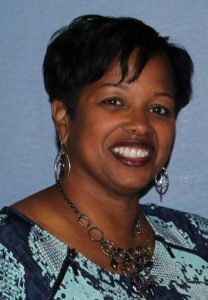
The first presenter for this year’s Amelia Murdoch Speaker Series is Deborah Crimes, founder of the international education organization Lessons From Abroad.
Deborah will be speaking on February 11, 2017 from 2:00 – 4:00 pm at the City of College Park – City Hall, 4500 Knox Rd, College Park, MD 20740. (For more information and to register, simply visit the event page.
Deborah spoke with NML Vice President Greg Nedved about growing our minds to go global.
How did Lessons from Abroad come about?
After 15 years in corporate America, I decided that there was a greater mission for my life and my community. I found that there was a huge need for introducing children to languages and cultures, a need help parents raise global leaders and most importantly, a need to ensure that our children would be ready to work in this global world. My love for languages, cultures and children collided and I founded Lessons From Abroad, an international educational organization to fill those needs.
How does one grow one’s mind to go global?
One can grow one’s mind to go global in these five steps: (1) become infatuated with all things global – soak it all up from the news, networking with people from other countries, travel abroad, and Internet research; (2) learn a language or improve the language you learned in HS or college; (3) become culturally immersed — learn as much as you can about the people, history and the culture of the country you are interested in; (4) take a test run by visiting the country and experiencing it as a tourist; and finally, (5) do your research and network in order to find a job that will take you to that country to live and work or just to travel there periodically for business.
What is your favorite anecdote from your book Grow Your Mind to Grow Global?
My favorite story is actually Barbara Cornejo’s story – a Spanish teacher who used to work for Lessons From Abroad and one of the contributors to the book.
Barbara’s family was forced to move to the states from Chile when she was young. She lived most of her young life in Chicago. Once it was safe to return to Chile, the family decided it was time to go home to Chile. When Barbara heard the announcement of the move that would happen in only six short months, she wanted to know why she wasn’t consulted on the decision. Barbara decided that she was old enough to stay in the states. She would live with her friend Patti and her family.
Needless to say, her parents were not having it and Barbara moved to Chile with the rest of the family. She had to re-learn her native tongue and learn to “fit in.” It was a tough road, but in the end Barbara appreciated the experience of living and learning in both countries. I love Barbara’s story because it shows that with perseverance you can do anything. Barbara went back to Chile, graduated from HS and returned to the states. Today Barbara is studying for her PhD at the University of Las Vegas.
What was the hardest thing about writing your book?
The hardest thing was taking the time to sit down to write the book. There were many personal and business obstacles that came about throughout my writing journey. I had to fight hard to focus on the task at hand and get it done. I enlisted accountability partners and they helped me through the process to ensure that I met my deadlines.
What is your own language background?
I studied Spanish since 7th grade and fell in love with the language because of my experiences outside of school. I am from Brooklyn, NY and several of my friends and relatives are of Hispanic descent. Being around them, the language, the food and the culture, made me grow to love all things Spanish.
You identify yourself as a cultural awareness advocate. What is that?
As a cultural awareness advocate, my organization provides experiences to promote cultural awareness. Lessons From Abroad programming — language classes, Soccer in Spanish, Adult Spanish, and Study Abroad for Educators, The Multicultural Literary Expo for Children (promoting languages and culture through storytelling, dance, drama, art and food tastings), All About the Arts Summer Enrichment camp and my new book Grow Your Mind to Go Global are just a few of the avenues used to promote cultural awareness.
We also partner with other organizations (schools, churches and youth groups) to promote cultural awareness by presenting on relevant topics. For example, I’ve presented to PTA and other groups on “Being Bilingual”, “How to Raise a Global Child”, and other topics that promote cultural awareness.
Since you’ll be presenting at the National Museum of Language, what are your thoughts on the role of language museums?
I see the museum as a resource for the community to get exposure to other languages, culture and history. I also see the museum as a cultural advocate just like me – advocating for the importance of language learning and collaborating with other organizations to ensure that language learning is as essential in school as Math and Science. Lastly, I see the museum as a venue for hosting special cultural events and partnering with embassies and other international organizations.