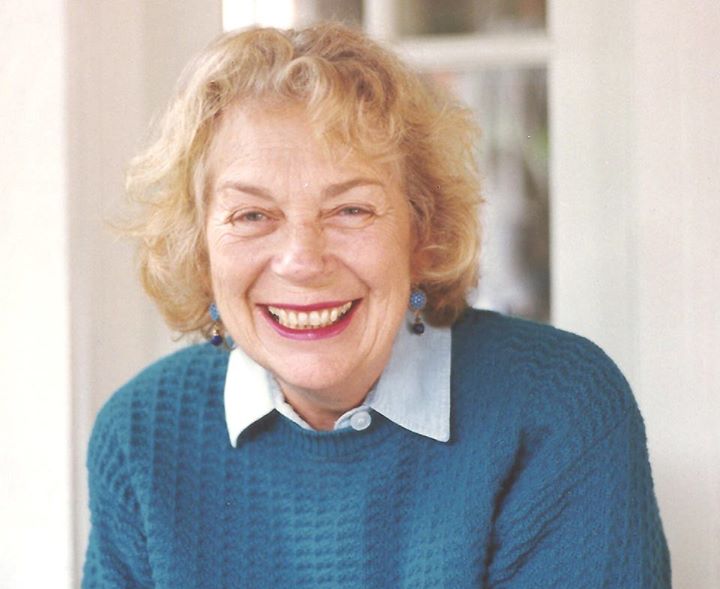
Renee Duke

2024 Renee Duke Youth Award poetry contest

The history of the human race records great achievements in the progress of civilization – language, medicine, technology, education, etc. Yet human rights remains Mankind’s most neglected and fought element.

In December of 1948, the United Nations adopted the Universal Declaration of Human Rights.

In practice, the granting of human rights for all has yet to be accomplished. 

“La plume est plus forte que l’epee.” – “The pen is mightier than the sword. “  first written by novelist and playwright Edward Bulwer-Lytton in 1839, in his historical play Cardinal Richelieu.

Since 2006, Poets for Human Rights has conducted an annual youth award poetry contest to forward the message of the Universal Declaration of Human Rights.

2024 Renee Duke Youth Award poetry contest

Send one original poem related to Human Rights.

Cover sheet : Include name, address, age, school and grade, permission to publish, poem title. Short bio is optional.

Contest is open to poets 19 years old and younger. There will be one cash prize of $100.

Familiarity with the Universal Declaration of Human Rights is recommended. An abridged copy of the Universal Declaration of Human Rights is available upon request.

Winning poem will be announced and read at Poets for Human Rights annual awards on or around Dec. 10, the 76th Anniversary of the Universal Declaration of Human Rights. The poem will be posted on the Renee Duke Youth Award Poetry Contest Facebook page.

Style: Any poetic form.

Length: 1 page, letter size dimensions 8.5 by 11 inches.

Format: Left justified, 12 point font.

No colors, no graphics.

Submissions deadline: Saturday, November 30, 2024.

No simultaneous submissions or previously published poems.

Submit entries to poetsforhumanrights@gmail.com, in the body of email or pdf attachment. No hyperlinks or word.doc attachments will be considered.

In subject line, write “poetry contest”

Demo Title

Demo Description


My first Popup

This will close in 20 seconds

Fanni is Radnóti's wife
Located near the Tang capital city of Chang’an, site of the modern city of Xi’an in Shaanxi province, in central China.
Soldiers of that time commonly wore a white head cloth, similar to what is still worn by some peasants in China today.  The implication is that the conscripts were so young that they didn’t know how to wrap their head cloths, and needed help from elders.
Before China’s unification under the Qin dynasty in 221 B.C. there were several competing smaller kingdoms.  Han and Qin were two of these kingdoms. Han was located east of famous mountain passes that separated that area from the power base of the Qin dynasty, with its capital in Chang’an. The Qin dynasty itself only lasted about 15 years after unification due to its draconian rule, but soldiers under Qin rule retained a reputation as strong fighters.
The area of Guanxi, meaning “west of the passes”, refers to the area around the capital city of Chang’an.
This is an alternative name for a province in western China, now known as Qinghai, which literally means “blue sea”.  Kokonor Lake, located in Qinghai, is the largest saline lake in China.  
Before China’s unification under the Qin dynasty in 221 B.C. there were several competing smaller kingdoms.  Han and Qin were two of these kingdoms. Han was located east of famous mountain passes that separated that area from the power base of the Qin dynasty, with its capital in Chang’an. The Qin dynasty itself only lasted about 15 years after unification due to its draconian rule, but soldiers under Qin rule retained a reputation as strong fighters.
Oulart Hollow was the site of a famous victory of the Irish rebels over British troops, which took place on May 27, 1798. The rebels killed nearly all the British attackers in this battle. (Source: Maxwell, W. H. History of the Irish Rebellion in 1798. H. H. Bohn, London 1854, pp 92-93, at archive.org)
The phrase "United Men" is elaborated upon in the Notes section below.

Ghetto


An Italian word meaning “foundry.” It originally referred to a part of the city of Venice where the Jews of that city were forced to live; the area was called “the ghetto” because there was a foundry nearby. The term eventually came to refer to any part of a city in which a minority group is forced to live as a result of social, legal, or economic pressure. Because of the restrictions placed upon them, ghetto residents are often impoverished.

"You’re five nine, I am do-uble two"


A reference to the year 1959 and the year 2020.

"The Currency"


Meaning US dollars - this is drawing attention to the fact that Cuba is effectively dollarized.

"Sixty years with the dom-ino stuck"


This sentence is a reference to the Cold War notion that countries would turn Communist one after the other - like dominos. Cuba was the first domino, but it got stuck - no one else followed through into communism.

رحلنا


رحلنا, or "rahalna," means "we have left."

Habibi


Habibi means "my love."

Ra7eel


Ra7eel, or "raheel," means "departure."

3awda


3awda, or "awda," means "returning."

أهلاً


أهلاً, or "ahalan," means "welcome."

a5 ya baba


a5 ya baba, pronounced "akh ya baba," means "Oh my father."

golpe


Treece translates "golpe" as "beating", which is correct, however misses the secondary meaning of the word: "coup".

Carlos


The “Carlos” referred to in the poem is most likely Carlos Bolsonaro, a politician from Rio de Janeiro and the second son of Jair Bolsonaro, Brazil’s current president. His and his father’s involvement in Marielle’s murder has been questioned and investigated.