Endangered Alphabet Sudoku

Friend of the Museum Tim Brookes has published a book of Sudoku puzzles using endangered alphabets. He has shared a sample with us for your puzzle-solving fun. The introduction to this book explains more.


Introduction


Why endangered alphabet sudoku?

In almost every corner of the world, there are communities with their own writing system — alphabets, pictographs, other forms of writing — that has been forced to the brink of extinction.

More than 90% of the world’s writing systems are in this critical situation. When a script falls into disuse, the entire written record of that culture — sacred texts, poems, personal correspondence, histories, the collective collected wisdom of that people — is lost. And with it goes much of their sense of history, identity, self-respect, and purpose.

It’s a cultural and spiritual catastrophe. Research all over the world shows that under these circumstances the extent and quality. of education, average birth weight and life expectancy go down, while levels of infant mortality, homelessness and incarceration, and even suicide go up.

Conversely, some communities have tried to gain a sense of linguistic pride and cultural identity by inventing their own writing systems, but those scripts struggle for acceptance in the face of those of more powerful neighbors.

The Endangered Alphabets Project is the only organization in the world promoting and supporting marginalized scripts. We do that by compiling the Atlas of Endangered Alphabets (endangeredalphabets.net), by raising awareness, by providing technical help, by promoting the artwork of typographers and calligraphers breathing new life into their culture’s letterforms — and by making games …

. . .like these sudoku, which open the player’s eyes to what it must be like to be out of our depth in a country that uses a different language or script. An endangered alphabet sudoku shows us all too vividly how hard it is to process unfamiliar written symbols. It’s hard enough to recognize and identify the symbols themselves one by one, but trying to scan the mass of glyphs to pick up likely combinations is extraordinarily difficult. We may feel baffled, overwhelmed, angry, foolish, resentful. This is the challenge many minorities, refugees and immigrants face every day.

Hint: in the face of this challenge, I tackle these puzzles by assigning each symbol a number from 1-9, solve the puzzle using symbols I know well, then convert them back to the endangered alphabet symbols. But you may not want to
take such short cuts!

Either way, have fun, fellow geeks!

Tim Brookes
Founder, the Endangered Alphabets Project
www.endangeredalphabets.com

Sudoku is a number puzzle where the goal is to fill in a 9×9 grid with numbers 1–9 so that each row, column, and 3×3 quadrant has exactly one of each number. 

In Tim’s version, instead of the numbers 1-9 you have nine different letters or characters from a particular minority script. But you’re still trying to do the same thing: make sure that each row, column, and 3×3 quadrant has exactly one of each symbol. For your convenience, the pdf below may be printed or print the sudoku grid here.

Powered By EmbedPress

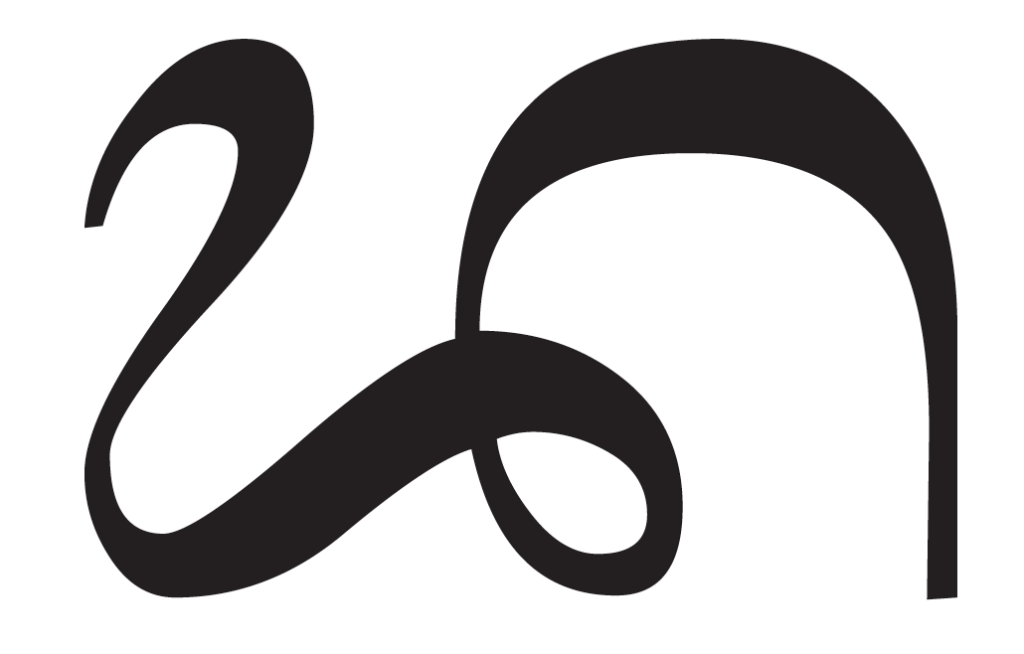
Balinese Alphabet Sudoku

Text and puzzle © Endangered Alphabets Sudoku by Tim Brookes – Percentage Possibility Publications $17.95 Available at https://www.endangeredalphabets.com/endangered-alphabetsmerchandise/

Demo Title

Demo Description


My first Popup

This will close in 20 seconds

Fanni is Radnóti's wife
Located near the Tang capital city of Chang’an, site of the modern city of Xi’an in Shaanxi province, in central China.
Soldiers of that time commonly wore a white head cloth, similar to what is still worn by some peasants in China today.  The implication is that the conscripts were so young that they didn’t know how to wrap their head cloths, and needed help from elders.
Before China’s unification under the Qin dynasty in 221 B.C. there were several competing smaller kingdoms.  Han and Qin were two of these kingdoms. Han was located east of famous mountain passes that separated that area from the power base of the Qin dynasty, with its capital in Chang’an. The Qin dynasty itself only lasted about 15 years after unification due to its draconian rule, but soldiers under Qin rule retained a reputation as strong fighters.
The area of Guanxi, meaning “west of the passes”, refers to the area around the capital city of Chang’an.
This is an alternative name for a province in western China, now known as Qinghai, which literally means “blue sea”.  Kokonor Lake, located in Qinghai, is the largest saline lake in China.  
Before China’s unification under the Qin dynasty in 221 B.C. there were several competing smaller kingdoms.  Han and Qin were two of these kingdoms. Han was located east of famous mountain passes that separated that area from the power base of the Qin dynasty, with its capital in Chang’an. The Qin dynasty itself only lasted about 15 years after unification due to its draconian rule, but soldiers under Qin rule retained a reputation as strong fighters.
Oulart Hollow was the site of a famous victory of the Irish rebels over British troops, which took place on May 27, 1798. The rebels killed nearly all the British attackers in this battle. (Source: Maxwell, W. H. History of the Irish Rebellion in 1798. H. H. Bohn, London 1854, pp 92-93, at archive.org)
The phrase "United Men" is elaborated upon in the Notes section below.

Ghetto


An Italian word meaning “foundry.” It originally referred to a part of the city of Venice where the Jews of that city were forced to live; the area was called “the ghetto” because there was a foundry nearby. The term eventually came to refer to any part of a city in which a minority group is forced to live as a result of social, legal, or economic pressure. Because of the restrictions placed upon them, ghetto residents are often impoverished.

"You’re five nine, I am do-uble two"


A reference to the year 1959 and the year 2020.

"The Currency"


Meaning US dollars - this is drawing attention to the fact that Cuba is effectively dollarized.

"Sixty years with the dom-ino stuck"


This sentence is a reference to the Cold War notion that countries would turn Communist one after the other - like dominos. Cuba was the first domino, but it got stuck - no one else followed through into communism.

رحلنا


رحلنا, or "rahalna," means "we have left."

Habibi


Habibi means "my love."

Ra7eel


Ra7eel, or "raheel," means "departure."

3awda


3awda, or "awda," means "returning."

أهلاً


أهلاً, or "ahalan," means "welcome."

a5 ya baba


a5 ya baba, pronounced "akh ya baba," means "Oh my father."

golpe


Treece translates "golpe" as "beating", which is correct, however misses the secondary meaning of the word: "coup".

Carlos


The “Carlos” referred to in the poem is most likely Carlos Bolsonaro, a politician from Rio de Janeiro and the second son of Jair Bolsonaro, Brazil’s current president. His and his father’s involvement in Marielle’s murder has been questioned and investigated.