Announcing Next Speaker Series Event: Spotlight on Mongolia

Mongolian script
Mongolian script

Contemporary Mongolia’s Utilization of Language and Script for Political Purposes

Dr. Alicia Campi

Saturday, May 9, 3-5 pm. Free parking is available. Admission is free. Parking passes available onsite.

DirectionsCity of College Park  City Hall Council Chambers  4500 Knox Rd, College Park, MD 20740

The Mongolian language and original Uighur script, developed at the time of Chinggis Khan in the 13th century, are not well-known outside of Mongolian Studies, but their use for political purposes by the Mongolian, Chinese, and Russian governments during the last two centuries is a fascinating and at times tragic story. Historical and cultural disputes resulted in alternative Tibetan-influenced (Phagspa and soyombo) and then Stalin-era (cyrillic) scripts which reflected a larger struggle over the national identity of the Mongol-speaking peoples. Dr. Campi will explain how such concerns continue today as independent Mongolia tries to connect with the globalized world.
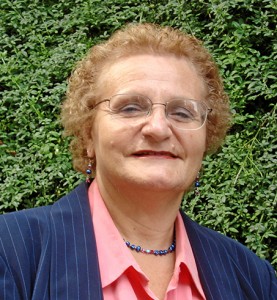
Alicia Campi, Ph.D.
Alicia Campi, Ph.D.

Dr. Alicia Campi has been researching all aspects of Mongolian Studies, Northeast Asia, and Sino-U.S. relations for over 35 years. She has an A.B. from Smith College, a M.A. from Harvard University, and a Ph.D. from Indiana University. In her 14 year diplomatic career with the U.S. government, she was posted in Singapore, Taipei, Tokyo, UN Mission in NYC, and Ulaanbaatar. In the mid-1980s in Tokyo she conducted preliminary negotiations leading to the establishment of diplomatic relations between the U.S. and Mongolia. Presently, she is an adjunct professor at the Reischauer Center at SAIS/Johns Hopkins University teaching about Mongolia’s energy resources and integration into Northeast Asia and is a business consultant and writer for journals and on-line publications about the Sino-Mongolian region. Among her numerous publications is her book on The Impact of China and Russia on United States-Mongolian Political Relations in the Twentieth Century (2009).

Please help us to plan for the event by registering your attendance in the form below.

See Previous events in the NML Speaker Series

Demo Title

Demo Description


My first Popup

This will close in 20 seconds

Fanni is Radnóti's wife
Located near the Tang capital city of Chang’an, site of the modern city of Xi’an in Shaanxi province, in central China.
Soldiers of that time commonly wore a white head cloth, similar to what is still worn by some peasants in China today.  The implication is that the conscripts were so young that they didn’t know how to wrap their head cloths, and needed help from elders.
Before China’s unification under the Qin dynasty in 221 B.C. there were several competing smaller kingdoms.  Han and Qin were two of these kingdoms. Han was located east of famous mountain passes that separated that area from the power base of the Qin dynasty, with its capital in Chang’an. The Qin dynasty itself only lasted about 15 years after unification due to its draconian rule, but soldiers under Qin rule retained a reputation as strong fighters.
The area of Guanxi, meaning “west of the passes”, refers to the area around the capital city of Chang’an.
This is an alternative name for a province in western China, now known as Qinghai, which literally means “blue sea”.  Kokonor Lake, located in Qinghai, is the largest saline lake in China.  
Before China’s unification under the Qin dynasty in 221 B.C. there were several competing smaller kingdoms.  Han and Qin were two of these kingdoms. Han was located east of famous mountain passes that separated that area from the power base of the Qin dynasty, with its capital in Chang’an. The Qin dynasty itself only lasted about 15 years after unification due to its draconian rule, but soldiers under Qin rule retained a reputation as strong fighters.
Oulart Hollow was the site of a famous victory of the Irish rebels over British troops, which took place on May 27, 1798. The rebels killed nearly all the British attackers in this battle. (Source: Maxwell, W. H. History of the Irish Rebellion in 1798. H. H. Bohn, London 1854, pp 92-93, at archive.org)
The phrase "United Men" is elaborated upon in the Notes section below.

Ghetto


An Italian word meaning “foundry.” It originally referred to a part of the city of Venice where the Jews of that city were forced to live; the area was called “the ghetto” because there was a foundry nearby. The term eventually came to refer to any part of a city in which a minority group is forced to live as a result of social, legal, or economic pressure. Because of the restrictions placed upon them, ghetto residents are often impoverished.

"You’re five nine, I am do-uble two"


A reference to the year 1959 and the year 2020.

"The Currency"


Meaning US dollars - this is drawing attention to the fact that Cuba is effectively dollarized.

"Sixty years with the dom-ino stuck"


This sentence is a reference to the Cold War notion that countries would turn Communist one after the other - like dominos. Cuba was the first domino, but it got stuck - no one else followed through into communism.

رحلنا


رحلنا, or "rahalna," means "we have left."

Habibi


Habibi means "my love."

Ra7eel


Ra7eel, or "raheel," means "departure."

3awda


3awda, or "awda," means "returning."

أهلاً


أهلاً, or "ahalan," means "welcome."

a5 ya baba


a5 ya baba, pronounced "akh ya baba," means "Oh my father."

golpe


Treece translates "golpe" as "beating", which is correct, however misses the secondary meaning of the word: "coup".

Carlos


The “Carlos” referred to in the poem is most likely Carlos Bolsonaro, a politician from Rio de Janeiro and the second son of Jair Bolsonaro, Brazil’s current president. His and his father’s involvement in Marielle’s murder has been questioned and investigated.