
On March 19th, Ottar Grepstad, the director of the Nynorsk kultursentrum in Norway, released Language Museums of the World, an eBook featuring museums of languages of all sizes, specialities, living and dead languages. The NML was featured in this book, and we had the opportunity to speak with Ottar about the creation of the book. See what he has to say here.
Please tell me about yourself and your language background.
I am a cand. philol.. with six years of experience in language and literature, an author of more than 30 books in Norwegian about language, literature and cultural history. I am a former publisher and former chairman of board of Language Council of Norway, and from 1999 General Director of Centre for Norwegian Language and Literature. My first language is Norwegian Nynorsk, one of two official languages in Norway, but lesser used than Norwegian Bokmål. At the University of Bergen in Norway I studied Norwegian, German and the Nordic languages.
What inspired you to write a book about the language museums in the world?
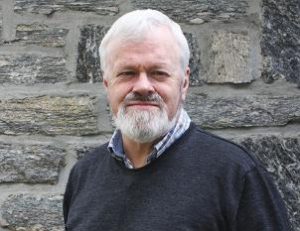
It was just a matter of lack of knowledge. Quite soon we understood that our institution is the only language museum in the Nordic countries in Europe. We were eager to find colleagues for cooperation and exchange of experience and to broaden our own perspectives.
What kind of research did you do for the book? Did you visit any of the museums?
I chose the hard way to find all of you. I have visited some, and intended to visit many during 2017, but became too occupied with the daily work.
Back in 2008, when it all started, just a few languages museums were easily found in Wikipedia and a few other sources. It was all made by digital research, looking for “language museums”, “linguistic museums”, “museums of language”, in English, German, Spanish and some other languages. By 2009, I had found 34, but some of the museums never answered any e-mails.
I continued with systematic searches every second year or something like that. Having found some, you would find traces of others. This digital accumulative method brought me to strange places and some black holes, but also to many real existing museums. In 2016, I asked for help from all the embassies to Norway. In that way, I could include language museums in countries like Paraguay. Some colleagues at language museum knew about possible candidates to check out and include.
The most difficult part of it was to define what is a language museum. Many museums of archaeology or history contain sections or even whole departments of exhibitions about language and written culture, for instance the British Museum in London, National Museum of Ethnology in Osaka, and the many Smithsonian museums in the USA. Language and written culture is, however, not a main focus of their field of work. The boundary between a museum of writing and a museum of literature is anything but sharp. Literary museums seldom discuss language matters, but nevertheless, a few museums of culture that emphasizes language have been included as a reminder of the fact that any language is a cultural issue, and an essential one.
What helps make the NML unique compared to other language museums?
Most language museums concentrate on one language or a group of languages. National Museum of Language has a broader perspective, and in my book, only five other museums do the same. What you have in common with all other language museums, is the linguistic enthusiasm and eagerness to show how important language is in the society and to people using their languages.
What are your thoughts on the concentration of museums in Europe and North America?
The whole idea of museums is a Western one, isn’t it? Combined with the social structures of Western societies, where the politics of memory is quite institutional, the concentration is not surprising.
Why do you think there is a lack in Asia and Africa?
Adding to what mentioned above, it might also be a matter of language. There might be, and I think there is several, language museums presenting themselves in non-Western languages or languages that I do not master. In fact, I have included a few museums from whom I never got any answer, such as Language Movement Museum in Dhaka, Bangladesh. China is building lots of Western-like institutions, but the Chinese embassy to Norway had no knowledge of any language museum in their country.
What would your vision be for a language museum?
A vision will differ with political and historical background, and I would be careful to tell colleagues in other countries what to do. That said, my vision is a museum that makes people curious and surprises them with new, reliable and critical stories about languages and their speakers. A modern language museum should keep updated with linguistic research and even keep an eye with the issue of linguistic power. It is quite easy and very popular to present writing systems and remedies, but I would look more for the social relations between speaking and writing, between dominating and weaker languages, and the linguistic rights of citizens in different countries. Let us go comparative!
In November, I will be retired, and then nothing can keep me from visiting many more language museums. My next book will deal with a major issue; how can linguistic and other cultural conflicts be solved by non-violence? We Norwegians have some experience with this, and I want to compare it with other countries. I am quite sure that some museums have stories to tell me about this.
View Ottar’s book here: