
By now, most of us have been doing some form of digital teaching for nearly 2 months; whether it be completely digital where we “see” each child every day on Zoom or Google Meets (more likely their avatar or name). Maybe we are doing a hybrid model where some students are online and others are in person. Either way, you have probably gotten in a groove for digital teaching.
However, I have noticed that the part of teaching that has gotten the stale the most quickly for me has been interpretive reading. Listening has not changed much compared to the classroom, writing in some ways has gotten easier with hyperdocs or Google Docs, and breakout rooms have made interpersonal speaking just as good as the classroom, but expecting students to read silently while the teacher stares at a screen for 20+ minutes not sure if the students are understanding just does not work well. Today we are going to look at a few strategies I have successfully implemented in my classroom that make interpretive reading more dynamic, more interactive, and more engaging for both the students and teacher.
Word Clouds
One area I have been focusing on with students is helping them personalize the vocabulary garnered from the reading so that at the end of the class, students have found words that resonate with them in addition to a more expansive vocabulary list that is shared with the whole class.
One way I have kept students engaged digitally during these vocabulary-finding readings has been the use of world clouds. PollEverywhere, Wordle, or other similar services allow students to contribute to a dynamic word cloud that changes based on student inputs. For example, when teaching my students about the consequences of climate change, we did a pre-reading in which we reviewed the causes, and this cloud was made by my students using PollEverywhere.
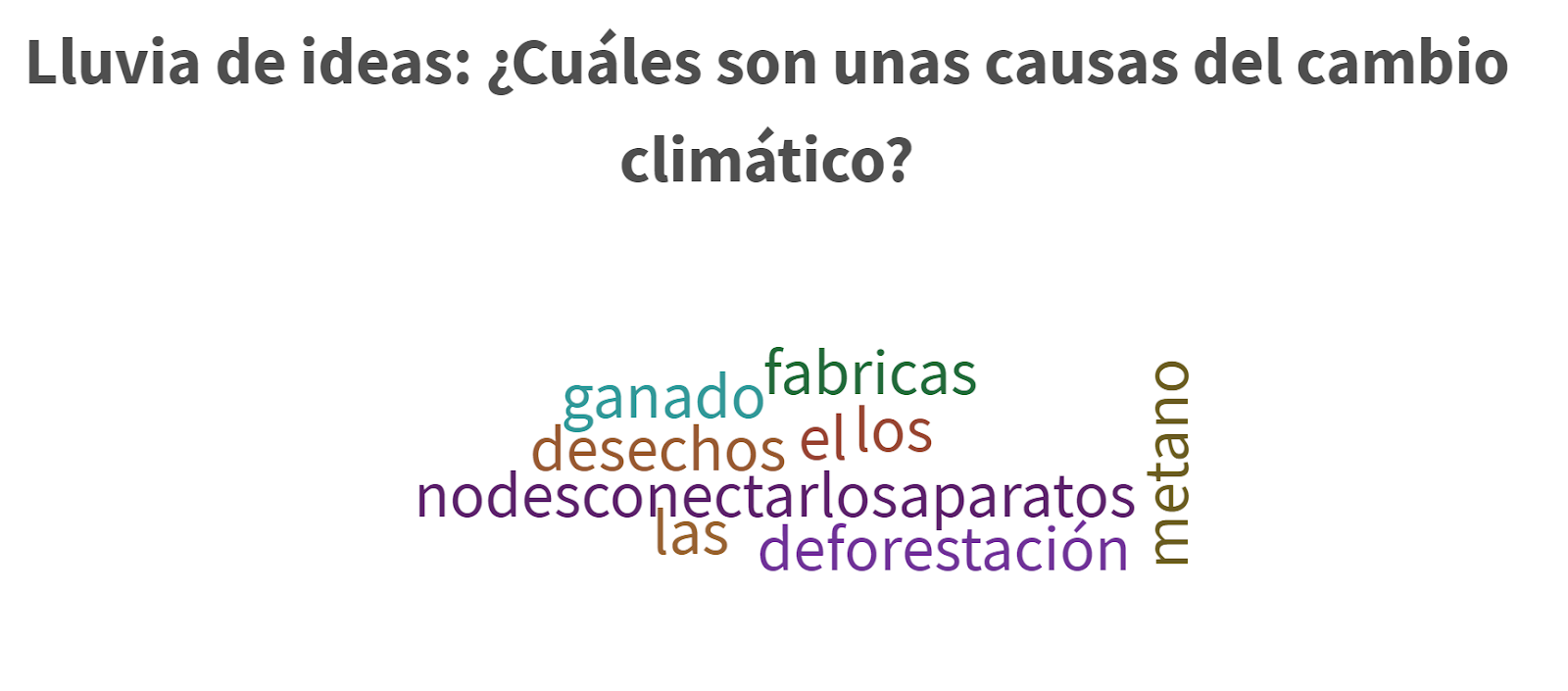
As you can see, you will want to recommend students to only either use individual words or to clump them together without spaces, otherwise you may end up with quite a lot of articles or other superfluous words showing up too large, as a repeated word becomes larger. However, if you see a vocabulary word becoming larger, you can use this to your advantage as it implies many students are familiar with it, and you can reinforce the smaller, less frequently appearing vocabulary words.
Interactive Annotation
Annotation is a critical reading skill that can benefit learners at all levels, from marking cognates to underlining words that define key vocabulary concepts. However, it can be difficult to do digitally, and even harder to make sure that students are understanding what you are asking them to.
Using PollEverywhere or other sites that allow you to create clickable images, you can have students annotate,mark, or highlight a text together, which will not only help make your class more engaging, but also give students a whole-class example that they can use when doing their own annotations of a text.
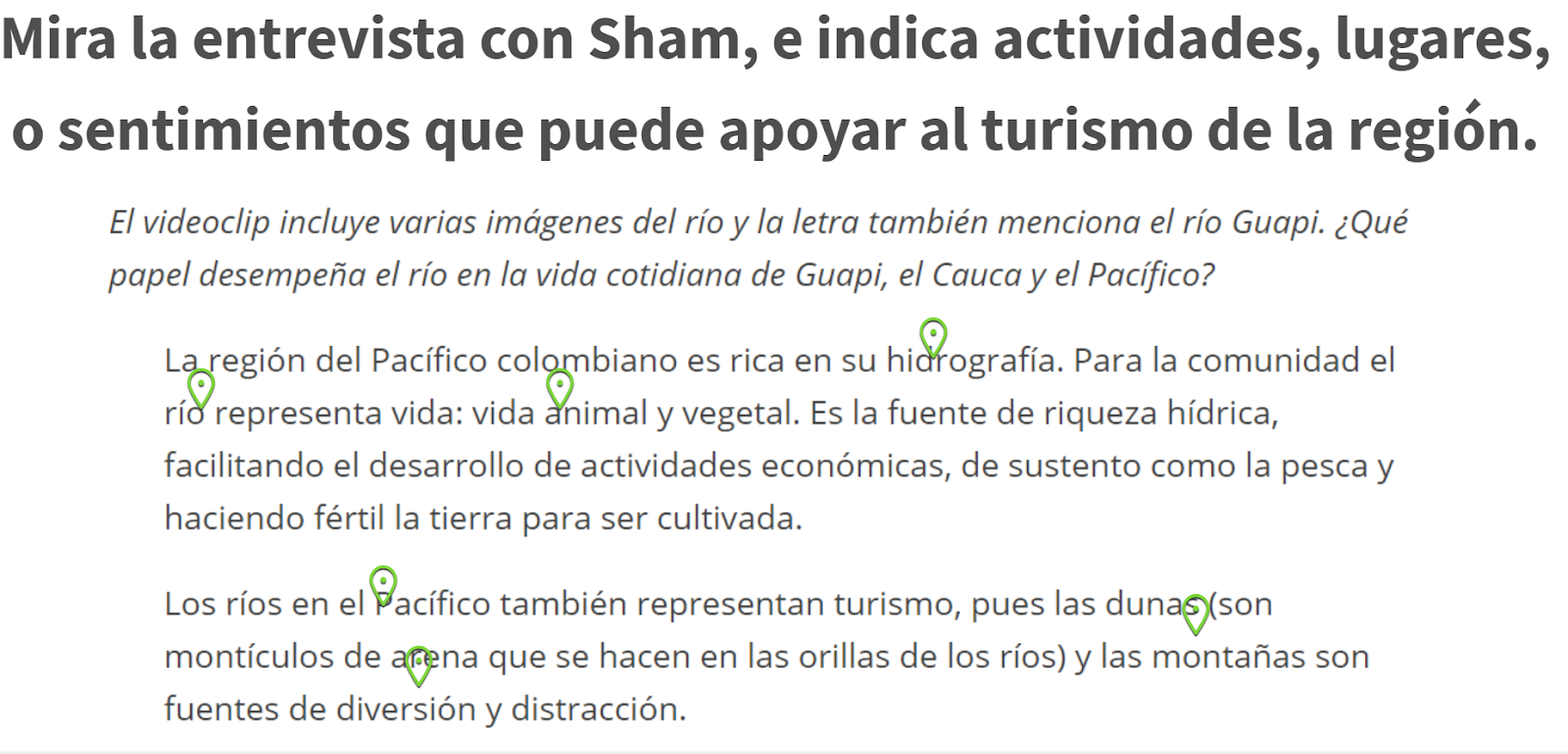
In this example, students clicked on part of an interview with a Colombian artist that I found on zachary-jones.com, and as we were studying tourism, students clicked on words of geography, activities, etc., that Sham uses that make Guapi, his region of Colombia, attractive for visiting tourists. Students now have seen their own examples of how Guapi is supported as a tourist destination, but have also seen more found by other students. For more advanced students, you could use a different program such as Jamboard and have students add their own text boxes with stronger, college-level annotations instead of simple highlighting of words. They can then mark their own copy to have a complete set of strong annotations. It is unlikely that all students would be able to get all of these words individually, so if each student is now able to contribute one word to our whole class annotation, all students will end up benefiting.