
As we have begun the school year across the nation, language teachers are hearing about new and sometimes daunting initiatives from their school districts. For sure, the most consistent push around the country has been giving students authentic resources and opportunity to practice the language in lieu of a traditional vocabulary and grammar focus.
As districts move towards CI, TPRS, authentic resources, and, possibly most importantly, students producing meaningful language from day one, it can seem daunting to any teacher, old or new. However, what is not always fully explored is what exactly “meaningful language” means, especially at lower levels. As we know, the main goal of ACTFL and many state standards is communication, as it is the foundation and purpose of a language.
For many teachers, meaningful language sounds like full sentences, presenting opinions, and other fairly complex tasks. But remember, we have to learn to crawl before we walk. By remembering the KISS method (Keep It Simple, Señor) we can start to define meaningful language from day 1, which will help not only guide our lessons, but give students the confidence and the building blocks to become successful language users as they move along the path of proficiency.
Let’s take a look at this infographic, and see how we can produce meaningful language from each level of proficiency, tailoring the task to the students so that they can demonstrate their success at their level.
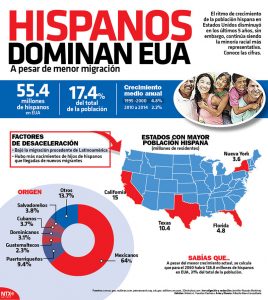
For level 1, beyond memorized language and phrases, meaningful language can be as simple as a yes or no. Therefore, continue to expose them to authentic resources, but tailor the task to fit their needs. Although it is possible to make questions too easy (at my job, we tend to call these softball questions), such as Si o no, 64% de latinoamericanos son mexicanos, “True or False: 64% of Latinos in America are Mexican,” there are other simple questions that can get students using the language while also thinking critically. For example,Si o no, muchos latinoamericanos viven cerca de la frontera con México y el Caribe. “True or False: Many Latinos in America live near the border with Mexico or near the Caribbean.” Students still need to use their interpretive reading skills, along with bringing in some geography skills, but are truly demonstrating that they understand the content.
For level 2, instead of a true or false question, we can begin to integrate production of meaningful full sentences, depending on the ability and time of year, with opinions, ancillary facts, or more. At the beginning of the year, it is possible to ask a student ¿La mayoría de latinoamericanos viven cerca de cual país? “The majority of Latino Americans live near which country?” The question being asked has students finding the same information, but instead of a simple true false questions, requires students to look more closely at the infographic and taps into their knowledge of geography. They are still conveying the same information, but are required to produce more complex language to demonstrate their knowledge.
At level 3, many students are still novices, with a few intermediates but are constantly and rapidly increasing their understanding of the language. This is the perfect time to integrate complex outside skills into language learning. A start question could be ¿Cuál porcentaje de latinoamericanos viven en California, Texas, y Florida? “What percentage of Latino Americans live in California, Texas, and Florida?” Students will integrate math skills while looking at the map; after they have answered this question, have students guess why. Many students will respond along the lines of “The states are close to Mexico.” Again, they have gotten the same results as the lower levels, but have used more complex language and critical thinking skills to come to the conclusion.
Finally, for upper levels, take what has been asked in level 3, but then ask them why and how so many Latinos have come to the US. This simple infographic becomes a springboard to history, modern politics such as NAFTA, and many other real world discussions that can be had in the language classroom. AN AP class can also be asked to come to a conclusion about the title, which translates to “Hispanics dominate the US, in spite of lower immigration.” Students can explore if this title is accurate, the reasons that immigration has been lowered, or many other topics relevant to a language classroom that will put their skills to the test.
As you can see, just because a student is a novice learner does not mean you should prevent them from being exposed to real language; in fact, lack of exposure is what will keep them from ever advancing! However, even the most ambitious teacher needs to keep in mind that novice learners still need novice, but meaningful, tasks, and by tailoring the task to their level you can have students due enriching tasks they may not have otherwise.
The Teacher’s Corner is a new feature for the Museum. Every month, we will feature techniques, strategies, interviews, and more to expand the boundaries of your teaching practice. If you would like to be a guest contributor on a future article, please email rob@languagemuseum.org