
Join us December 10, 2016, from 2:00 – 4:00 pm at the City of College Park – City Hall, 4500 Knox Rd, College Park, MD 20740 Free parking is available. NML staff at the door will provide parking passes.
Presidential Foreign Language Trivia by Greg Nedved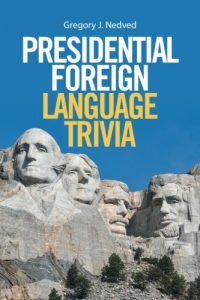
Author Gregory J. Nedved acknowledges the presence of books on presidential trivia. However, he does not know of any trivia book pertaining to presidents and their foreign language experiences and background. Being a professional Chinese-Mandarin linguist and with his past experience of having written a presidential trivia book, Nedved writes “Presidential Foreign Language Trivia” (published by Xlibris).
Presented in a trivia book format, Nedved’s book about the foreign language backgrounds and experiences of U.S. presidents is a first of its kind, being an unusual topic covered in books. “Seeing how past presidents dealt with language issues can be instructive in today’s debates,” the author notes.
By studying the U.S. presidents, Nedved is familiar with the foreign language background of presidents; studying about the book’s topic is his hobby. The author also intends his work to be a fun book, introducing to readers an area of presidential research not well-covered.
“One thing I hope they will learn is that not all presidents were good in languages or even cared about them. Nor does language skill equate to success as a president,” Nedved adds.
About the Author
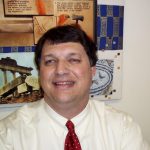 Yankton, SD, native Gregory J. Nedved has over 30 years of experience as a military and government Chinese-Mandarin linguist, translator, interpreter and instructor. Currently a Defense Department historian, he won a 2011 literature award for his research on the Sino-Vietnamese War of 1979. He is also the vice president of the National Museum of Language (NML) in College Park, MD. He led the effort to create NML’s unique International Flag of Language in 2008. He is the author of numerous books and articles in topics as diverse as presidential trivia, steamboats, UFOs, and the Chinese of Deadwood, South Dakota. He has a Bachelor of Arts from Saint Vincent College in history and Masters of Arts from Hawaii Pacific University in diplomacy and military studies. He is also a graduate of the Naval War College Fleet Seminar Program and the University of Chicago’s Advanced Translation Certification Program. He also wrote the books “South Dakota Presidential Trivia” in 1995 and “SDUFO: A Case History” in 2004.
We’d like to plan for you to join us. To reserve your space in this free event, please complete the form below.
 The Amelia C. Murdoch Speaker Series is continuing in the 2016-2017 season. We are accepting proposals from potential speakers and nominations of people you’d like to see at our series. Please share your suggestions in the form below or send an email to info [at] languagemuseum.org