Test Your Language Skills
Test Your Language Skills Read More »
The history of architecture furnishes the lover of language with a robust supply of unusual and enlightening etymologies. The term itself was initially popularized in English in the 1550s from the Greek arkhitekton, meaning “master builder.” Here you’ll find 5 etymologies from the field of architecture, from the ancient Greeks to modern times. Cantilever: A popular structure of
Dogs, Butterflies, and Buildings: 5 Architectural Etymologies Read More »
Text and cartoons by Linda Thompson The Philogelos, typically translated as “the joker” or “the one who loves laughter”, is an ancient Greek collection of approximately 265 jokes. Dating to the 4th or 5th century CE, it typically bears the title of the world’s oldest surviving collection of jokes. After reading Dan Crompton’s translation of
The Philogelos: Joke #197 Read More »
Is it possible to begin studying a foreign language in college, only to become a professional linguist, published author, and Army interpreter? If you’re NML Vice President Gregory Nedved, the answer is a resounding yes. Greg started learning Mandarin Chinese while studying in Taiwan. Since then, he has worked for more than 30 years in the Army
On Leadership and Languages: Interview with Gregory J. Nedved Read More »
Text and cartoons by Linda Thompson The Philogelos, typically translated as “the joker” or “the one who loves laughter”, is an ancient Greek collection of approximately 265 jokes. Dating to the 4th or 5th century CE, it typically bears the title of the world’s oldest surviving collection of jokes. After reading Dan Crompton’s translation of
The Philogelos: Joke #177 Read More »
ANNAPOLIS, Md. – When author and NML vice president Gregory J. Nedved realized that there were no trivia books pertaining to presidents and their foreign language experiences, he set out to change that. From his background as a professional Chinese-Mandarin linguist and published author, Nedved brings us Presidential Foreign Language Trivia. Presented in a trivia book format, Nedved’s
National Museum of Language VP Announces Release of Latest Book Read More »
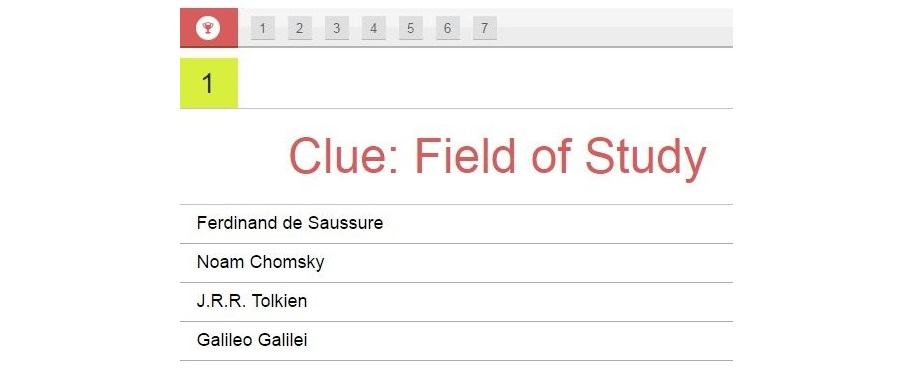
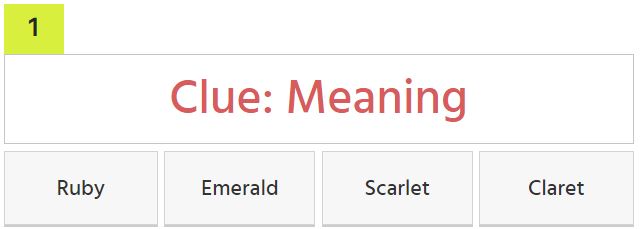
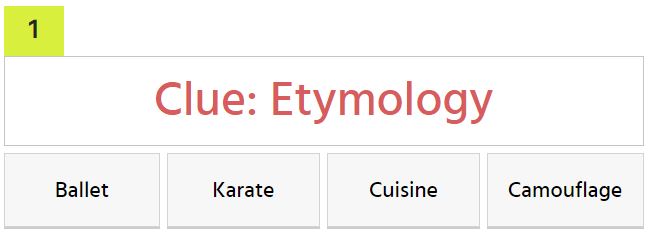
Ready to put your language skills to the test? Try the devilishly difficult second installment of the popular word game. Follow the clues to find the “odd man out” in each set.
Language Olympics: Round 2 Read More »
Behind some of the most popular names is a tapestry of religion, diaspora, combat, and integration. Take an etymological tour of 10 of the most popular male and female given names in the English language. John: Derived as Juan, Jean, Hans, Ivan, Giovanni, as well as a host of other multicultural variations, this ubiquitous name is
What’s in a Name? 10 Popular First Names and their Origins Read More »
When Ralph Dumain took the Canadian Esperanto Association’s proficiency exam in 1976, the score was so high that judges practically had to create a new category for his certificate. This achievement parallels perfectly his affinity for the practice of autodidacticism, or self-education. Since 1999, Dumain has been running the Autodidact Project, a large collection of
Intellect as Equipment: Interview with Ralph Dumain Read More »
Demo Description
My first Popup
This will close in 20 seconds